Can buyers tell when a listing is virtually staged?
Lennard Klein
Virtual Staging · July 12, 2026 · 4 min read
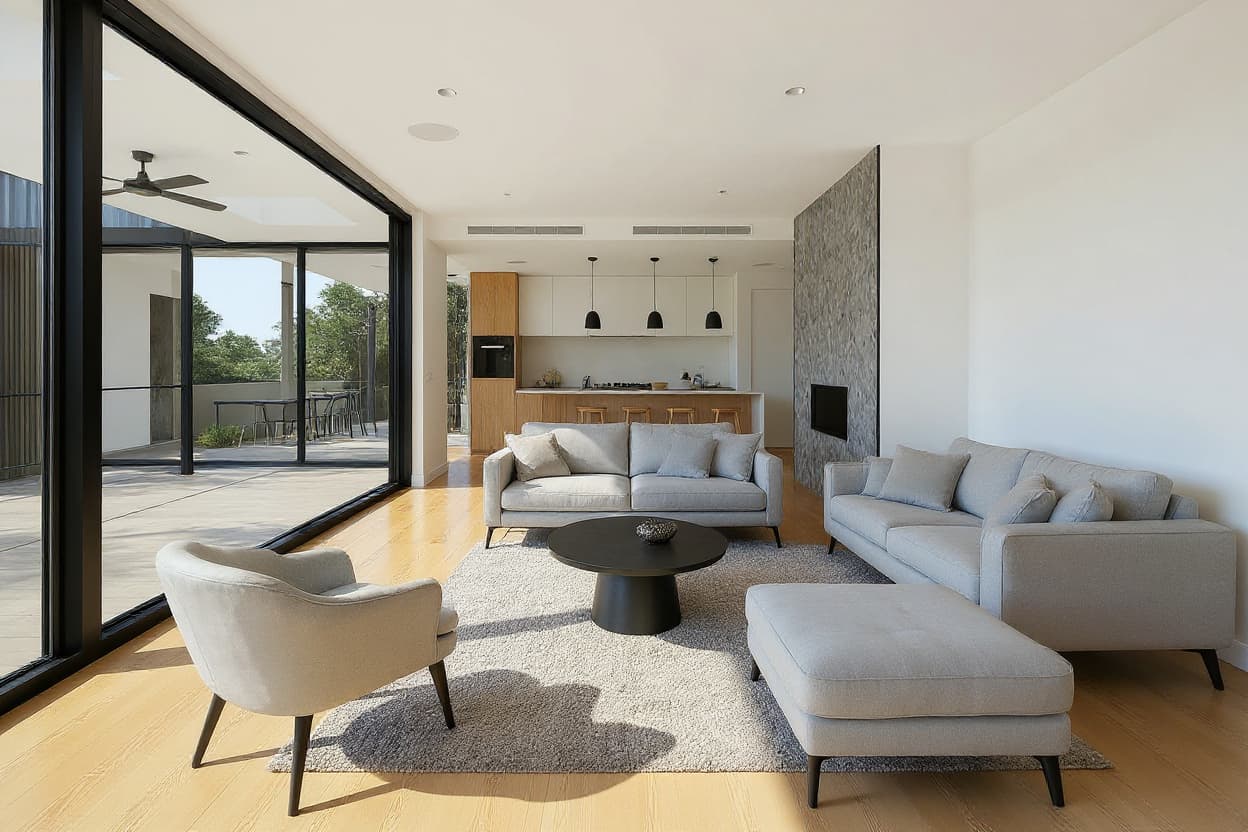
It's the question every agent asks before their first staged listing: will buyers notice? The honest answer is sometimes — and it matters much less than you'd think, as long as you play it straight.
What makes staging read as fake
Bad virtual staging has tells: furniture that floats above the floor, shadows pointing the wrong way, a sofa whose perspective doesn't match the room, windows that suddenly show a different view. These artifacts come from staging that composites stock furniture onto a photo without understanding the room's geometry.
Modern AI staging works differently — it generates furniture inside the room's actual perspective, light direction and materials. When the architecture is preserved and the lighting is consistent, staged photos read as photography. Judge for yourself: our examples gallery shows real outputs with a slider, so you can inspect exactly what changed.
What buyers actually punish
Buyers don't walk away because a listing was staged — staging is a decades-old, widely understood practice. They walk away when reality doesn't match the photos in ways that matter: rooms that are smaller than they appeared, defects that were hidden, finishes that were "upgraded" in the photo.
That's why the line to hold isn't "undetectable" — it's honest. Furniture in, architecture untouched, and a clear "virtually staged" label. We've written up the disclosure rules in detail in our disclosure guide.
Disclosure is a feature, not a confession
Here's the counterintuitive part: labeling photos as virtually staged doesn't hurt. Buyers who know a vacant home was staged still feel the warmth of the staged version — and they appreciate knowing what's furniture and what's house. The label converts skeptics instead of losing them.
Some agents go further and show both: the staged photo to lead, the original alongside. On portals that support it, that pairing consistently outperforms an empty room standing alone.
The real question: staged vs. empty
The comparison that matters isn't "staged vs. real furniture" — it's "staged vs. bare walls." An empty room gives buyers nothing: no scale, no function, no feeling. If the choice is between a cold vacant photo and a disclosed, well-made staged one, the staged photo wins the click and the showing. That's the whole game — more on it in why virtual staging sells listings faster.
Want to see if you can tell? Drag the sliders in our gallery — then stage your own photo free.
Lennard KleinFounder, estateo
Building estateo — AI virtual staging and listing media for real-estate professionals. Writes about listing marketing, staging and the tools that move properties faster.